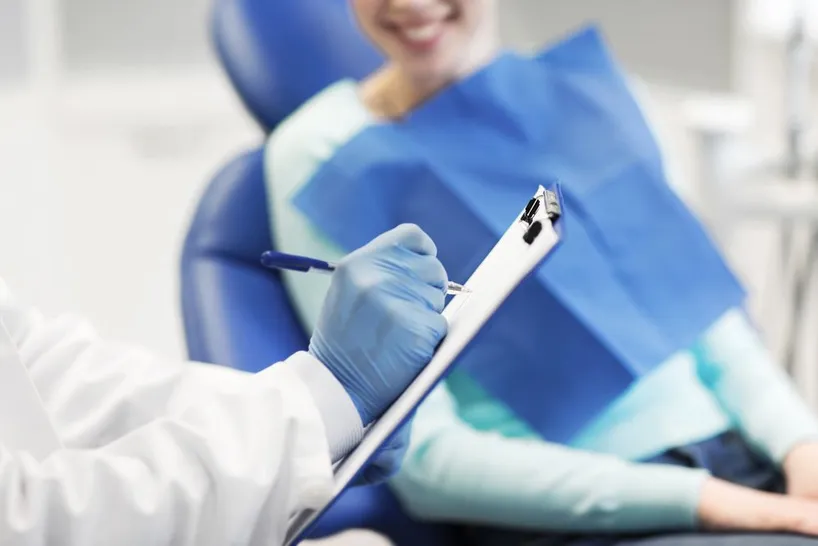
Oral cancer screening is a vital procedure aimed at detecting early signs of oral cancer, including abnormal tissue changes in the oral cavity and surrounding areas. The screening test typically involves a visual oral examination (VOE) to identify abnormal findings in asymptomatic individuals.
At Dental Designs KC, our dental specialists perform thorough oral cancer screenings to identify potentially malignant disorders and early stages of oral squamous cell carcinoma, noting that over 90% of oral cancers are squamous cell carcinomas, which highlights the importance of early detection.
Early detection through routine screening tests, especially organized screening tests, has been shown to significantly improve outcomes and prognosis.
Customized Oral Cancer Screening Plans
Our experienced team evaluates your oral health and risk factors, such as tobacco use, alcohol consumption, and family history of head and neck cancer, to assess your individual cancer risk using personal and lifestyle factors and develop a personalized screening plan. High risk groups, including individuals with tobacco or alcohol use, may benefit from more frequent or targeted screening to improve early detection and outcomes.
The screening process is particularly important for detecting oral cavity cancer at an early stage. The screening involves a comprehensive examination of the mouth, throat, neck, and lymph nodes to detect any abnormal cells or lesions.
Importance of Early Detection and Patient Evaluation
Early diagnosis of oral cancers and oropharyngeal cancers through regular screening enables earlier detection, which leads to more effective treatment, such as surgery, radiation therapy, or chemotherapy, and improved survival rates. Our dental team emphasizes patient education on self-screening and awareness of early signs to ensure timely medical care.
Schedule your oral cancer screening at Dental Designs KC today to take proactive steps in maintaining your oral health and detecting cancer at its earliest stages, as identifying cancer at an early stage is crucial for optimal prognosis.
Schedule Your Oral Cancer Screening Today
If you are at increased risk for oral cancer or have concerns about abnormal tissue or symptoms, schedule a consultation with our Kansas City dental experts. If abnormalities are detected, a follow-up visit may be scheduled to monitor changes or healing.
We will guide you through the screening process, discuss further testing if needed—such as more tests or other tests that may be recommended to determine the nature and extent of any findings—and help you understand prevention and early diagnosis strategies.
We Can Help With Oral Cancer Screenings and More Call (816) 436-2242
Oral cancer screening is a clinical examination that checks for early signs of mouth cancer, including lumps, sores, or white and red patches in the oral cavity. Many patients present with oral cancer at a late stage, so early stage detection through screening is crucial for improving outcomes. It helps identify abnormal cells before they develop into cancer, and if any abnormalities are found, a clinical diagnosis is confirmed through further evaluation.
How often should I have an oral cancer screening?
The American Cancer Society and American Dental Association recommend that dental professionals perform oral cancer screenings during routine dental visits, especially for individuals with risk factors such as tobacco use or heavy alcohol consumption.
A systematic review of screening guidelines supports regular screening for high-risk individuals to improve early detection and outcomes.
What happens during an oral cancer screening?
The oral examination is performed by a specially trained dental professional who visually inspects and palpates the oral cavity, including the lips, tongue, floor of the mouth, and neck area to check for lumps or abnormalities. Advanced tools such as vital staining or specialized light sources may be used to detect abnormal tissue, which is compared to adjacent normal tissue to assess severity. Advanced screening tools are designed for high sensitivity in detecting early changes.
What are the risk factors for oral cancer?
Common risk factors include tobacco use (smoking or chewing), excessive alcohol consumption, human papillomavirus (HPV) infection, prolonged sun exposure to the lips, and a history of head and neck cancers.
Early identification of these risk factors can lead to timely cancer diagnosis and intervention. Some potentially malignant disorders may undergo malignant transformation, increasing the risk of developing oral cancer. Additionally, individuals with a history of oral or head and neck cancer are at risk for developing a second cancer and require ongoing surveillance.
What if an abnormal area is found during screening?
If suspicious areas are detected, further testing such as an incisional biopsy may be performed to obtain a tissue sample from the suspicious area, along with other procedures like fine needle aspiration or imaging such as magnetic resonance imaging (MRI), to diagnose cancer or potentially malignant disorders.
The biopsy helps distinguish between normal cells and cancer cells, which is crucial for accurate diagnosis and treatment planning.